Anatomy of a Scandal: Why We Can’t Let the Image of Olivia Pope Fade in 2026
Power dressing, visual authority and why looking deliberate still matters in 2026.
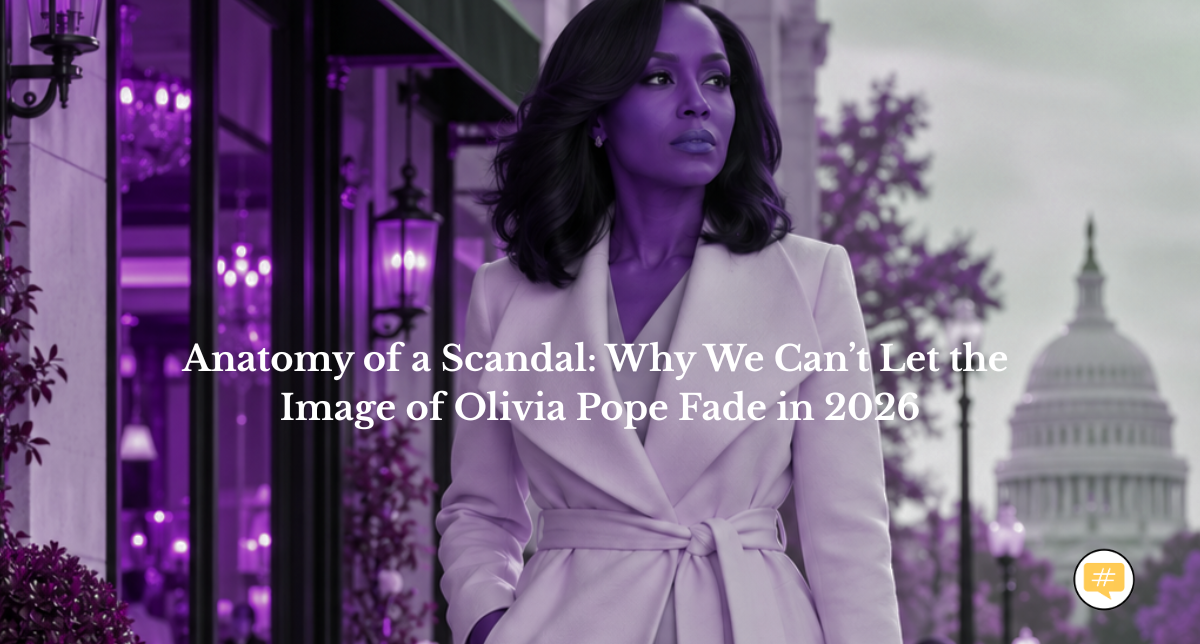
Olivia Pope understood the power of image. In 2026, maybe it is time we stopped pretending presentation does not matter at work.
Olivia Pope never dressed to disappear. Why should we?
There is something about Olivia Pope that still feels unusually clear in my head.
Not the plot.
Not the wine.
Not even the political chaos.
The image.
The cream coats. The gloves. The structured bags. The trousers that moved when she walked. The soft neutrals in rooms full of men wearing navy and charcoal.
She looked like a woman who had somewhere important to be.
And lately I have been wondering whether we have become a little embarrassed by that idea.
Olivia Pope understood that clothes could do some of the talking
Olivia Pope did not simply look wealthy.
She looked entitled to the room.
That is different.
Her wardrobe was soft, feminine and often pale, but there was nothing apologetic about it. Costume designer Lyn Paolo used tailoring, structure and a restrained palette to create a character who could walk into Washington’s most powerful rooms and visually belong there before she said a word.
Vanity Fair included Olivia Pope among television’s best-dressed characters in 2013, noting her Escada suits, Burberry trenches and structured Armani blazers. The clothes became part of the character’s authority, not decoration around it. Vanity Fair
She looked like a woman who had somewhere important to be.
I miss that.
Not because every woman needs to wear a coat that costs more than her first car.
Because there was an understanding that image communicates.
It always has.
Somewhere along the way, effort became suspicious
Work got more casual.
Some of that was overdue.
We stopped pretending a suit automatically made somebody competent. Hybrid work changed what people wore. Sneakers entered boardrooms. Start-up culture made hoodies practically a management credential for a while.
Fine.
But somewhere inside that shift, visible effort started to become slightly embarrassing.
Too polished can look try-hard.
Too dressed can look old-fashioned.
Too deliberate can somehow suggest that you care too much.
And sometimes I want to look like I tried.
I do not think that is shallow.
I think it is allowed.
Bring back the Olivia Pope coat
I mean this partly literally.
The coat was fabulous.
But I also mean the feeling of it.
That moment when you put something on and your posture changes slightly.
You walk differently.
You enter differently.
You feel prepared.
A coat is still a coat. But fashion has always sold us a feeling along with the fabric.
We understand this everywhere else.
We dress for weddings. Funerals. First dates. Courtrooms. Interviews. Awards nights. Important dinners.
We instinctively know clothing helps us mark a moment.
So I am not sure why we become so uncomfortable admitting that what we wear to work can affect how we feel inside it.
And then there is the fact that Olivia Pope was a Black woman
This part matters.
Scandal put a Black woman at the centre of a major American network political drama and gave her extraordinary visual authority.
She was not introduced as somebody grateful to be allowed into elite spaces.
She moved through them as though she already understood the architecture.
Variety later described Olivia Pope as a Black woman holding the reins of power with fearless confidence, which gets very close to why the image still matters.
A Black woman was walking through elite Washington spaces looking expensive, calm, feminine and completely accustomed to power.
That visual language was not incidental.
Especially for women who had spent generations being told that professionalism required making themselves smaller, quieter, safer or more acceptable.
Olivia Pope did not look like she was asking permission.
Maybe image is allowed to matter
This is where workplace conversations get weird.
We want to say performance is all that should matter.
Ideally, yes.
But humans do not work that way.
We read signals constantly.
Posture.
Voice.
Language.
Clothing.
Confidence.
None of those things should replace competence.
But pretending they communicate nothing is just silly.
The more useful question is whether we understand the signals we are sending and whether we actually chose them.
That is different from telling women there is one correct way to look professional.
There is not.
The point is not conformity.
It is intention.
What I actually want to keep from Olivia Pope
I do not need the entire wardrobe.
Although I will take several of the coats.
What I want to keep is the lack of apology.
She did not appear embarrassed by polish.
She did not dress as though intelligence required visual modesty.
She did not make herself look less powerful so somebody else could feel more comfortable.
And I think that is the piece worth remembering in 2026.
You do not need Olivia Pope’s wardrobe.
You do not need her heels.
You certainly do not need her personal life.
But perhaps we could keep the permission to be deliberate.
To dress beautifully because we like it.
To understand that image can be a language without confusing it for substance.
To walk into the room looking like we expected to be there.
Because Olivia Pope never dressed to disappear.
And neither should we.
Sources and Further Reading
Vanity Fair, The Top 10 Best-Dressed TV Characters, on Olivia Pope’s Escada suits, Burberry trenches and structured Armani blazers.